
Womply PPP KYC processFive checks. One verified identity.
PPP Fast Lane · Enhanced 2021 process
Best-in-class third-party tools, supplemented by Womply’s own manual reviews.
Womply’s Know Your Customer (KYC) process for the Paycheck Protection Program combined identity records, government ID authentication, facial matching and liveness checks with email, phone and bank verification. This overview describes the enhanced Fast Lane process documented in April–May 2021.
Five identity verification checks
Powered by Persona
-
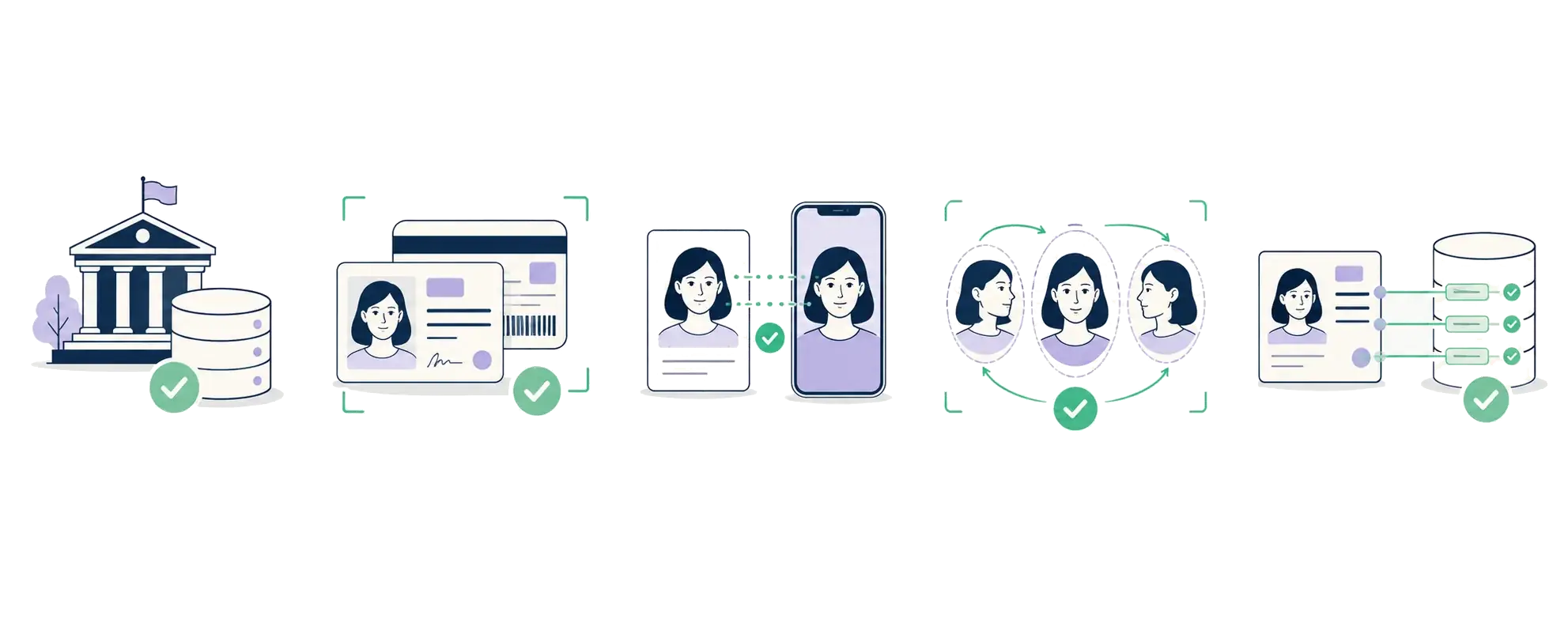
Find the person
Check the applicant’s name, date of birth and Social Security number against identity records, including government and DMV data, to verify that an identity record exists.
-
Authenticate the government ID
Check the front and back of the applicant’s government-issued identification for validity, signs of tampering and consistency with the information provided.
-
Match the face
Compare the photograph on the government ID with the applicant’s video selfie. Facial matching checks whether the person presenting the ID is the person pictured on it.
-
Test for a live human
Ask the applicant to follow directions and turn their face left, center and right. Persona’s automated liveness checks analyze the selfie to detect spoofed images and test for a live person.
-
Cross-check the details
Match ID information to the application and the database-verified identity. These comparisons check that the ID, the submitted details and the identity records agree.
Additional screening: OFAC sanctions and watchlists. These checks screen for sanctions risk; they are separate from verifying that a person exists.
DocuSign Knowledge Based Answers (KBA), powered by LexisNexis: used earlier in 2021 and selectively after Persona became Womply’s primary identity-verification provider in April 2021.
Womply added human judgment
Womply supplemented third-party identity verification with manual reviews of IDs and selfies to help identify signs of manipulation and other potential fraud.
Verification beyond the PPP’s prescribed checks
PPP rules required applicable, risk-based identity verification. Womply added biometric selfie matching and liveness checks that SBA rules did not specifically prescribe. [3]
Lenders retained their Bank Secrecy Act (BSA) and Customer Identification Program (CIP) obligations. This comparison concerns the additional verification methods; it is not a finding about compliance with every PPP requirement.